Reading Your CLP and HK Electric Bills Correctly
Learn how to decode tariff structures, identify peak and off-peak charges, and spot where you’re actually spending money on your electricity bill.
Discover how small adjustments to your air conditioning settings can significantly lower your electricity consumption without sacrificing comfort.

Here’s something most Hong Kong households don’t realize: your air conditioning is probably costing you way more than it needs to. We’re not saying you should sweat through summer — that’s not the point. What we’re saying is that a few simple temperature adjustments can cut your cooling bills by 15-25% without making your flat uncomfortable.
The trick isn’t complicated. It’s about understanding how AC systems work, knowing the right temperatures for different times of day, and being strategic about when you actually need maximum cooling. Most people just set their thermostat to one temperature and leave it there for months. That’s leaving money on the table.
Raising your AC by just 2C can reduce cooling costs by 10-15%. That’s measurable, real savings that you’ll see on your next CLP or HK Electric bill.
Most people think they need their AC set to 18-19C to be comfortable. In reality, Hong Kong apartments stay pleasant at 23-24C when there’s decent air circulation. The difference between 19C and 24C? That’s roughly 15-20% of your monthly cooling bill.
The secret is understanding that comfort isn’t just about temperature. It’s about humidity, air movement, and clothing choices. During humid Hong Kong summers, your AC needs to remove moisture from the air — that’s actually harder than just cooling. By setting a slightly higher temperature and running the fan on medium instead of maximum, you’re still dehumidifying effectively without overworking the system.
Don’t cool your flat when you’re not there. This seems obvious, but most people run their AC all day regardless. If you leave for work at 8 AM and don’t return until 6 PM, why’s the air conditioning working for 10 hours? You’re cooling an empty space.
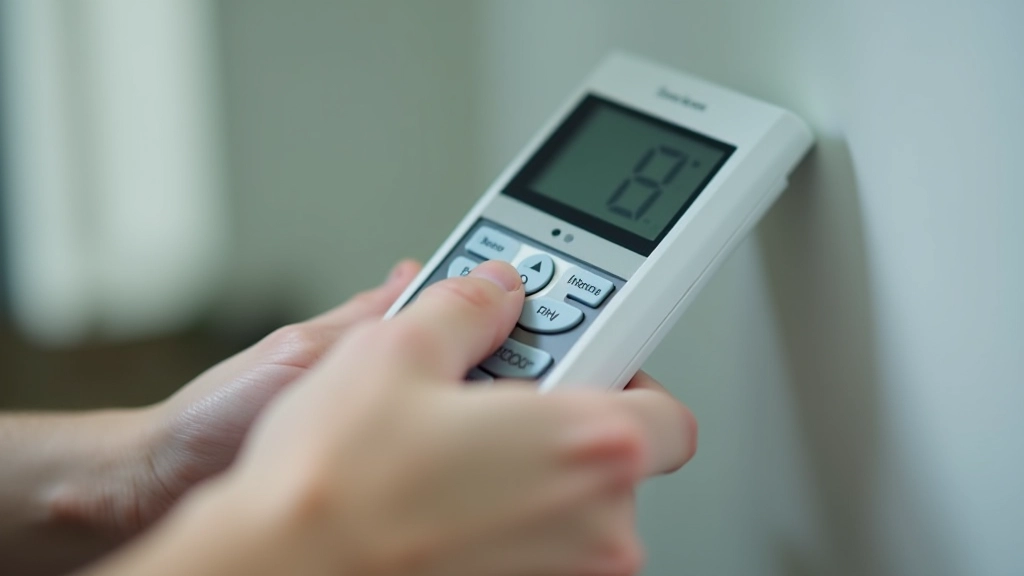
Instead, use a programmable thermostat or smart AC controller (available cheaply at most Hong Kong electronics shops). Set it to run 30 minutes before you get home. By the time you arrive, your flat’s cool and comfortable, but you haven’t wasted hours of electricity.
Mornings are usually cooler anyway — especially if you open windows early and close them once the sun gets hot. That free ventilation can keep your flat at 26-27C for much of the morning. Your AC doesn’t even need to kick in until midday during cooler months.
Set your AC to “thermostat” or “auto” mode instead of “cool” mode. This lets the system turn off when the room reaches the set temperature, then restart only when needed. Cooling mode runs continuously — that’s wasteful.
Maximum fan speed doesn’t cool faster — it just uses more electricity and creates annoying noise. Medium speed circulates air effectively while consuming 30-40% less power than maximum.
Don’t cool rooms you’re not using. Close bedroom and bathroom doors during the day. Your AC works more efficiently when cooling a smaller space — it reaches target temperature faster and cycles less often.
Dirty filters make your AC work harder. Clogged filters reduce efficiency by 15-20%. Take 10 minutes monthly to check and clean filters. It’s the simplest maintenance that actually saves money.
Hong Kong summers are brutally humid. That’s the real challenge — not just the heat, but the moisture in the air. When humidity’s 85-90%, you feel sticky and uncomfortable even at 24C. But here’s what most people miss: dehumidification uses less energy than cooling to a very low temperature.
Your AC removes humidity as a side effect of cooling. You don’t need to set the temperature super low to achieve this. Set your AC to 24-25C and run it for 30 minutes — that’s enough to drop humidity from 85% to 60%. After that, open windows briefly if possible, close them again, and raise the temperature back to 26C. The room stays feeling fresh but you’re using far less energy.
A small investment in a humidity meter (about $100-200 at any Hong Kong department store) is worth it. You’ll see exactly when your room’s humidity is comfortable and can adjust AC accordingly. Most people run AC much longer than necessary because they don’t realize humidity levels have already improved.

If you’re currently running AC at 19-20C most of the time and switch to the strategies above, you should see measurable savings. Here’s what’s realistic:
These aren’t theoretical numbers — they’re what customers report after making these changes. Your results depend on your current settings and how consistently you stick with the adjustments. Check your next CLP or HK Electric bill and compare it to the same month last year. You’ll see the difference clearly.
You don’t need to suffer through Hong Kong summers to save money on cooling. Small, consistent adjustments to temperature, timing, and AC settings add up to real savings over a month or season. The best part? These changes take almost no effort once you set them up. A programmable thermostat handles the timing automatically. Raising the temperature by a couple degrees? You’ll adjust in about a week. Running the fan at medium instead of maximum? You probably won’t even notice.
Start with one change this week — maybe just raising your temperature by 1C. Watch your next bill. Once you see the savings, try adding another adjustment. Before you know it, you’ll have optimized your entire system without sacrificing comfort. That’s the real win.
This article provides general informational guidance about air conditioning efficiency and temperature settings. Actual energy savings will vary based on your specific flat’s insulation, AC unit age and efficiency, local climate conditions, and usage patterns. The percentages mentioned represent typical ranges from user experiences and energy efficiency studies, not guaranteed results. Always consult your AC unit’s manual for manufacturer recommendations. For specific energy audits or professional advice about your cooling system, contact a qualified HVAC technician licensed in Hong Kong. Energy costs and tariff structures are subject to change — check your CLP or HK Electric account for current rates.